Nickel Based High-Temperature Alloy Forgings
Superalloy forgings manufactured to your specification, certified to the heat.
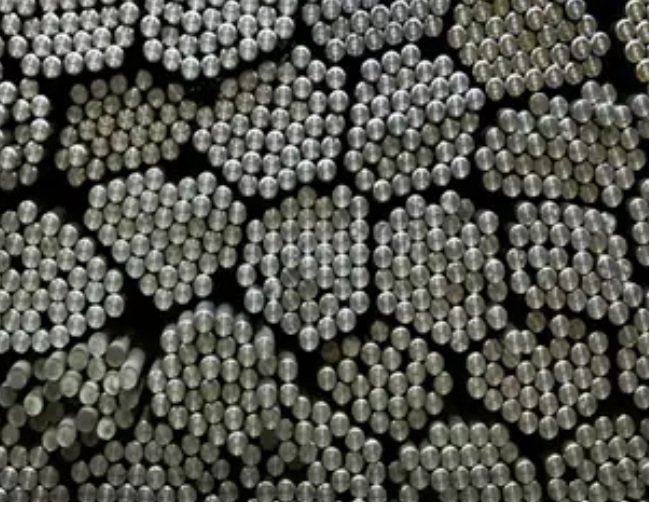
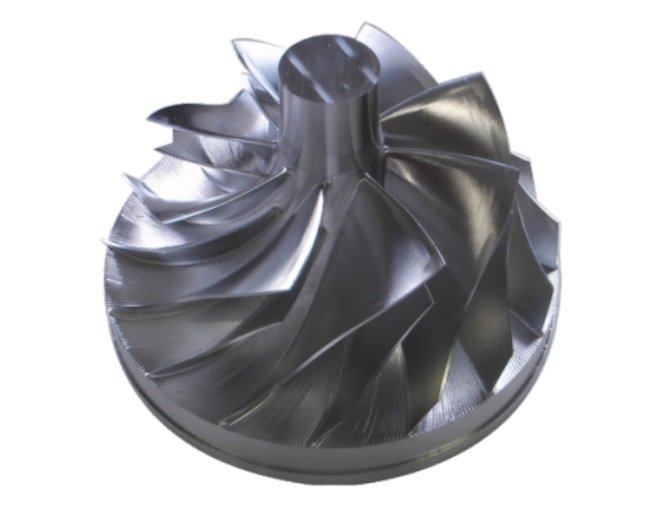
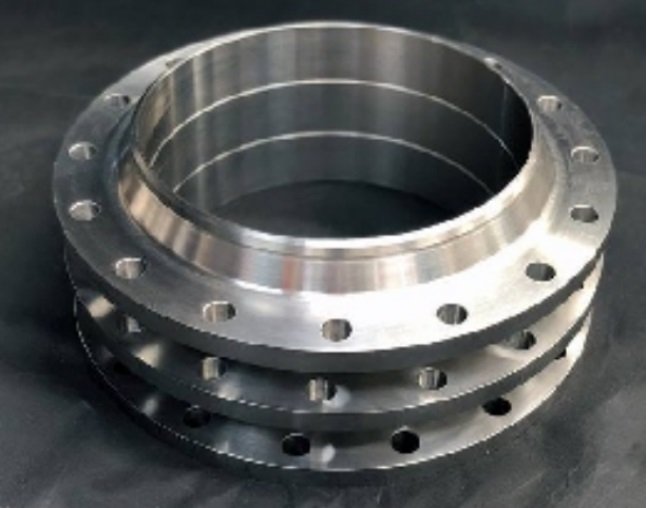
Nickel-based superalloy forgings are supplied for service where a component must hold its strength and its shape while working at elevated temperature — under load, under thermal cycling, and often in an environment that attacks the surface as well.
Typical products and materials: superalloy materials for gas turbines, Inconel 718 forgings.
Why Forged, Not Cast
For a component that works hot, the manufacturing route is a material decision rather than a cost decision.
- Grain flow follows the part. Forging works the metal so the grain structure runs along the shape of the component rather than randomly, which is what gives a ring or a disc its strength in the direction it is loaded.
- Soundness is inherent to the process. High-temperature service is unforgiving of internal discontinuities; a forging does not carry the solidification-related defects that a casting can.
- The section can be worked, not just filled. Mechanical working refines the structure in a way that heat treatment alone cannot.
Where a geometry is too complex to forge to shape, it is commonly forged to a near-net preform and finished by machining.
Inconel 718 Support Ring — Chemical Composition
Inconel 718 is a precipitation-hardening nickel-chromium alloy. Niobium is the principal hardening element, with molybdenum contributing solid-solution strengthening, and titanium and aluminium forming the strengthening precipitates. Chromium provides oxidation and corrosion resistance.
| Element | Requirement (% by weight) |
|---|---|
| Carbon (C) | 0.012 – 0.036 |
| Manganese (Mn) | ≤ 0.35 |
| Silicon (Si) | ≤ 0.35 |
| Phosphorus (P) | ≤ 0.015 |
| Sulfur (S) | ≤ 0.0010 |
| Chromium (Cr) | 17.00 – 19.00 |
| Nickel (Ni) | 52.00 – 55.00 |
| Molybdenum (Mo) | 2.80 – 3.15 |
| Niobium (Nb) | 5.20 – 5.55 |
| Tantalum (Ta) | ≤ 0.10 |
| Titanium (Ti) | 0.75 – 1.15 |
| Aluminium (Al) | 0.35 – 0.65 |
| Cobalt (Co) | ≤ 1.00 |
| Copper (Cu) | ≤ 0.30 |
| Boron (B) | ≤ 0.006 |
| Iron (Fe) | 16.00 – 19.00 |
Values are those of the applicable procurement specification, which is tighter than the general ASME SB 637 range in several elements. Composition is certified per heat against this specification.
Mechanical Properties of Inconel 718 Support Ring (ASME SB 637)
ASME SB 637 covers nickel-chromium-niobium-molybdenum alloy (UNS N07718) in the form of bar, forgings and forging stock. Mechanical properties under this specification depend on the heat-treatment condition, so the condition is part of the specification — not a manufacturing preference to be settled later.
| Test temperature | Yield strength σs 0.2% offset (MPa) |
Tensile strength σb (MPa) |
Elongation A (%) |
Reduction of area Z (%) |
Hardness (HB) |
|---|---|---|---|---|---|
| Ambient (room temperature) | ≥ 1035 | ≥ 1240 | ≥ 12 | ≥ 12 | ≥ 331 |
| 650 °C | ≥ 860 | ≥ 965 | ≥ 12 | ≥ 12 | Not specified |
Values are minimums as stated. Hardness is not specified at 650 °C.
Grade Equivalents
Inconel 718 is referenced under several numbering systems. They are commonly treated as interchangeable, but the composition ranges and acceptance criteria are not identical across every system, so an equivalent should be confirmed rather than assumed.
| Designation system | Inconel 718 | Inconel 625 |
|---|---|---|
| UNS | N07718 | N06625 |
| EN numeric | 2.4668 | 2.4856 |
| Composition designation | NiCr19NbMo | NiCr22Mo9Nb |
Equivalents are commonly cited; composition ranges and acceptance criteria are not identical across every system.
Where a drawing specifies an equivalent grade, the basis of the equivalence is confirmed in writing before production — whether the match is on composition, mechanical properties, heat-treatment condition, or service performance.
Machining & Handling
Inconel 718 work-hardens during cutting. Cutting parameters, tool condition and the condition of the material being machined all affect the result, and machining is therefore planned rather than improvised: which condition the part is machined in — solution-treated or aged — is decided from the specification and the required final properties.
Documentation Available
- Mill certificate to the applicable specification, traceable to heat number
- Heat-treatment records retained against the part
- Non-destructive examination where the specification requires it
- Dimensional inspection report issued per shipment
See also: NDT (Non Destructive Testing) service
Enquiry Checklist
- Drawing or 3D model, and the specification it is made to
- Grade and heat-treatment condition required
- Quantity
- Examination and certification requirements
- Where no drawing exists yet — a new design, or an existing part without usable documentation — the duty the part has to perform: temperature range, load case, cycling frequency, and the environment it works in. Where you are replacing an existing part, how it wears in service is useful additional input
Ready to Discuss Your Next Project?
Share your drawings, specification or the operating conditions the part has to survive.

