• Skip to main content
  • Skip to primary sidebar
  • Skip to footer

Sino Machine Industries

  • Home
  • About Us
  • Industries Served
    • SMI Products Overview
      • SMI Special Steel Products 01
      • SMI Special Steel Products 02
      • SMI Metal Recycling
      • NDT (Non Destructive Testing) service
  • Capabilities
    • Aluminum Industry
      • Aluminum Dross Press
      • Aluminum Dross Cooling Pan
      • Alloy Steel Sow Mold
      • Aluminum Dross Skim Blades and Skim Tools
      • Aluminum Furnace Skimming Tool or Skim blades used for Stirring and Mixing
      • Dross Press & Dross Processing
      • Application of Intelligent Ladle Slag Scraper (Skimming Tools) in steel mills and aluminum mills
      • Transmission Parts
      • The correct combination of the press head and the dross pan
      • 7-9kgs Small Standard Ingot Molds | Moldes de lingotes estándar pequeños de 7-9kgs
      • Comparison between Sow Molds and Ingot Molds
      • Aluminum Dross Transport Equipment
      • Aluminum Dross Recycling Systems
      • Aluminum, Magnesium, Brass, Bronze, Lead, Zinc Ingot Molds
      • Anode steel claw (Electrolytic claw) | Garra de acero del ánodo (garra electrolítica)
      • Anode Steel Yoke
  • eNews
  • Contact Us

Industries We Serve

December 24, 2018 By Coffy Leave a Comment

SMI Dross Processing in Aluminum Recycling Operations

Dross Processing in Aluminium Recycling Operations — Pan Design, Press Configuration and Why Results Vary
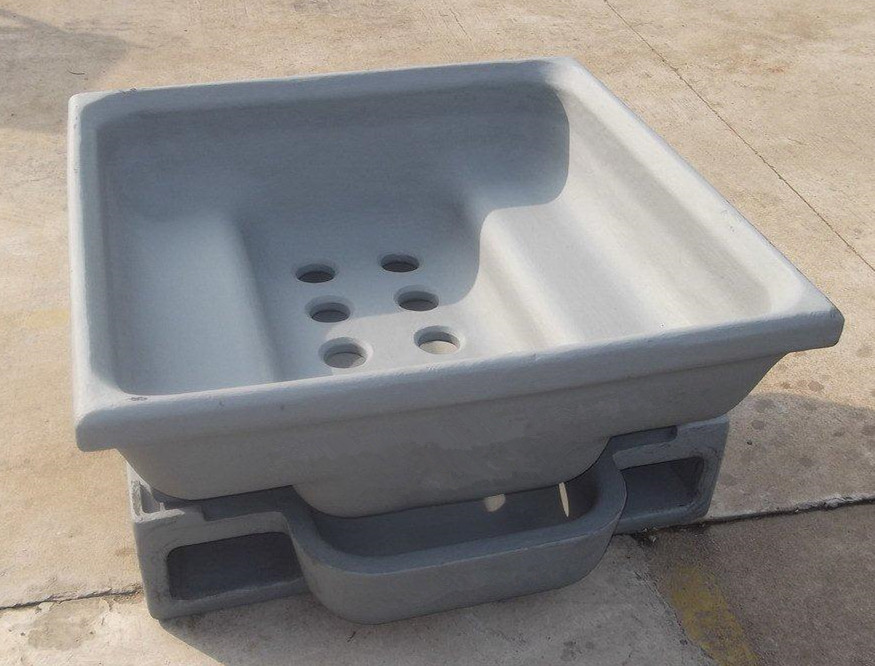
SMI alloy steel dross pan with multi-hole drain configuration and fork channels for aluminium casthouse dross processing
SMI alloy steel dross pan — multi-hole drain configuration with double counter-sink design, fork channels and large pan mass for maximum thermal cooling contact. Manufactured from proprietary alloy steel formulation for thermal shock resistance and long service life in continuous casthouse operation.

SMI has been supplying dross pans and dross press systems to the aluminium industry for over 30 years. Since 2009, Mr. David Roth has been our head consultant, bringing decades of experience in the global aluminium industry to SMI’s equipment design and customer application work.

All of the major players in aluminium melting and casting have purchased SMI quality castings. The observations in this article are drawn from that operational experience — from installations that worked well and from installations that did not, and from understanding precisely why the difference occurred.


The Dross Pan — Where Recovery Begins

The dross pan is not a passive container. Its design directly determines how much metal is recovered in the pressing cycle that follows. The unique characteristics of SMI’s dross pan design allow for a significant degree of cooling contact between the dross and the cast steel — a function of pan mass, geometry and surface area that cannot be replicated by a simple fabricated vessel.

The drain hole configuration is a specific engineering decision, not a standard feature. The number of holes and the double counter-sink design allows for the maximum drain possible without dross sticking in the holes — a failure mode that renders the drain function ineffective and forces operators to intervene manually. The distance between the skim position and the sow mould is also considered carefully in the pan design, to allow large drain volumes without the pans freezing together during the transfer process.

The cooling cycle for correctly specified dross pans is approximately two hours before the material can be rotated out. The large pan mass is critical to achieving this result — it is what drives the thermal extraction that makes the subsequent pressing cycle effective.

Some earlier pan designs in the industry relied on single-hole drain configurations. A single drain point is inherently prone to blockage given the viscosity and oxide content of hot dross — when it blocks, the entire drain function is lost. The single-chamber pan geometry also limits the cooling and plating action achievable during pressing. SMI’s multi-hole, double counter-sink design addresses both failure modes directly.

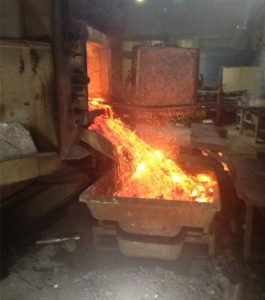
Hot aluminium dross being skimmed from furnace into SMI dross pan — casthouse operation
Hot aluminium dross being skimmed from the furnace into the dross pan — time from skimming to pressing is the critical variable in metal recovery
Liquid aluminium visible in freshly skimmed hot dross — immediate pressing required to prevent oxidation loss
Liquid aluminium visible in freshly skimmed hot dross — oxidation begins immediately after skimming
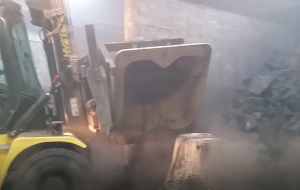
Forklift transfer of loaded SMI dross pan to aluminium dross press — fork channel design accommodates standard casthouse material handling
Forklift transfer of loaded dross pan to the dross press — pan design accommodates standard fork truck specifications for each installation

Press Capacity — The Operational Variable Most Often Underestimated

The most consistent cause of dross press underperformance in the field is not equipment quality — it is insufficient press capacity relative to the dross generation rate of the operation.

The mechanism is straightforward. Hot dross skimmed from the furnace begins oxidising immediately. The cooling and plating action that is the primary benefit of pressing — the conversion of liquid aluminium droplets into a recoverable solid block — requires the dross to reach the press while still at temperature. If a dross pan sits for more than 15 minutes before pressing, this process is already significantly compromised. The dross has cooled, the liquid aluminium has partially oxidised, and the pressing cycle produces a result that does not reflect the capability of the equipment.

When multiple pans queue in front of a single press, the pans at the back of the queue are already cold before they are processed. Operators observe poor results, conclude that pressing is ineffective, and gradually stop using the equipment — not because the press is at fault, but because the system was never configured with adequate capacity for the volume of dross being generated.

The practical implication for system specification is direct: the number of presses required for an operation is determined by the dross generation rate and the 15-minute processing window — not by capital budget alone. An undercapacity installation does not produce partial results; it produces results that appear to confirm that pressing does not work, which is a different and more damaging outcome.


The Pan and Press Head as a Matched System

The most important engineering decision in a dross press installation is the casting design of the pan and the press head as a matched pair. The press head must seat correctly against the pan walls to maintain an effective seal under hydraulic pressure — a poor geometric match allows dross to escape under compression and breaks the thermal contact that drives cooling performance.

SMI designs the pan and press head together, specifically for each customer’s furnace configuration, dross volumes and material handling capabilities — fork truck specifications, transfer distances and pan positioning. The combination of pan design and press head geometry determines the fastest possible cooling rate, the highest achievable drain volume and the most effective plating action for the specific dross type being processed.

The press itself — hydraulics, frame, automation — is in SMI’s view a delivery mechanism for the casting design. A high-quality press delivering poor results is almost always a pan-and-head geometry problem, not a press problem. SMI’s focus is on providing a high-quality, simple, low-maintenance press that fully utilises the recovery capability built into the casting design.


Operational Recommendations

Based on over 30 years of dross press installations across primary smelters, secondary smelters and recycling operations, SMI’s application engineering team consistently observes the following in operations that achieve the best results:

  • Minimise time from skimming to pressing — the 15-minute window is a real operational constraint, not a guideline. Workflow design should prioritise getting hot dross to the press as the first priority after skimming.
  • Size press capacity to dross generation rate — calculate the number of pans generated per shift and confirm that press capacity can process them all within the 15-minute window. If the numbers do not support a single press, two presses is the correct specification.
  • Specify pan and press head as a matched set — do not select the press and the pan independently. The geometric relationship between them is the primary determinant of recovery performance.
  • Maintain the pan-to-head seal — a worn or damaged mating face on either the pan or the head degrades recovery performance continuously. Replacement scheduling should be based on dimensional inspection, not visible failure.
  • Account for dross type — different furnace types and alloy practices produce dross with different characteristics. Pan and head geometry should be confirmed for the specific dross type being processed, not selected from a generic catalogue.

SMI Dross Pan Design — Key Features

Design Feature Function Failure Mode Addressed
Multi-hole drain configuration Maximum drain volume during pressing Single-hole blockage — loss of drain function
Double counter-sink hole design Prevents dross sticking in drain holes Hole blockage requiring manual intervention
Large pan mass Thermal mass drives cooling contact with dross Insufficient cooling — poor plating action
Pan-to-head matched geometry Effective seal under hydraulic pressure Dross escape and thermal seal failure under compression
Furnace-specific dimensioning Correct volume for furnace dross output Undersized or oversized pans relative to dross generation
Fork truck compatibility Safe transfer from furnace to press Handling delays that extend the pre-press window beyond 15 minutes

Related Products

  • Dross Skim Pans and Sow Moulds — matched pan-and-head sets, proprietary alloy steel
  • Dross Press Cooling Head — cooled and uncooled variants, all geometries
  • Aluminum Dross Press — SMI40, SMI60, SMI80 and custom configurations
  • Dross Press Equipment Overview — system configurations and upgrade options
  • Press Head and Dross Pan — matched configuration guide
  • Aluminum Dross Cooling Pan — post-press salt cake and dross cooling unit
  • Aluminum Dross Recycling Systems — complete downstream processing line

Contact SMI — Dross Processing Application Enquiry

To discuss dross pan and press head specification for your operation, or to review an existing installation that is not achieving expected recovery results, please contact SMI’s application engineering team. Please provide your furnace type, dross generation rate per shift, current pan and press configuration, and dross type.

SMI will respond with a written assessment and recommendation. Contact SMI →

Filed Under: Dross Management Tagged With: Aluminum Recycling, dross pan, Dross Press, dross processing, secondary smelter, SMI

March 8, 2018 By Sen Liang Leave a Comment

Cast Iron Alloying Cage

SMI Cast Iron Alloying Cage

Used for magnesium alloying in aluminum cast house furnaces. Mg capacity: 260kg ~ 650 kg
Casting Alloy Cage, Magnesium Alloying Cage For Aluminum Furnace Equipment.

Application:
Using for adding alloy into aluminum cast house furnaces. For example magnesium, manganese, nickel and so on into aluminum furnaces. Attach the cage to a long pole. And the other end can be lifted using a forklift to add the required alloy to the furnace.

Place of Origin: China
Model Number: According to customer’s specifications
Application: Aluminum Industry
Material: Casting Alloy Steel
Capacity available: 260kg ~ 650kg
Got free quote today: inquiry@sinomachine.org

Jaula de aleación de hierro fundido
Se utiliza para la aleación de magnesio en hornos domésticos de fundición de aluminio. Capacidad de Mg: 260 kg ~ 650 kg
Jaula de aleación de fundición, jaula de aleación de magnesio para equipos de hornos de aluminio.

Aplicación:
Se usa para agregar aleación en hornos domésticos de fundición de aluminio. Por ejemplo, magnesio, manganeso, níquel, etc., en hornos de aluminio. Sujeta la jaula a un poste largo. Y el otro extremo se puede levantar con una carretilla elevadora para agregar la aleación requerida al horno.

Lugar de origen: China
Número de modelo: ¡De acuerdo con las especificaciones del cliente!
Aplicación: Industria del aluminio
Material: fundición de acero aleado
Capacidad disponible: 260 kg ~ 650 kg
Obtuve una cotización gratis hoy: inquiry@sinomachine.org

Filed Under: Furnace Tools & Accessories

January 7, 2018 By Coffy

Daily Design Works- Agriculture gearboxes

Agriculture Gearbox Design and Manufacturing — Rotary Lawn Mower Series

SMI’s engineering team designs and manufactures agricultural gearboxes from initial concept through to finished product — covering 3D CAD design, casting, precision machining and assembly. The rotary lawn mower gearbox series shown on this page represents one area of SMI’s mechanical design and manufacturing capability, with configurations supplied to agricultural equipment manufacturers in Canada and other markets.

All gearbox configurations are developed to customer specification. SMI does not supply standard catalogue products — every configuration is engineered to the specific input/output requirements, mounting geometry and performance specification of the customer’s equipment.

SMI agriculture gearbox 3D CAD sectioned model showing multi-stage gear train, shaft layout and internal assembly — in-house engineering design capability
3D CAD section view of SMI-designed rotary mower gearbox — multi-stage gear train, bearing layout and housing geometry developed in-house before manufacture
SMI agriculture gearbox aluminium alloy housings in production — batch casting showing consistent dimensional quality
Aluminium alloy gearbox housings in production — in-house casting gives SMI direct control over dimensional accuracy and surface finish quality

Design and Manufacturing Capability

In-House CAD Engineering

SMI’s engineering team develops full 3D CAD models of gearbox assemblies before manufacture — covering gear geometry, shaft layout, bearing selection, housing design and assembly clearances. The sectioned CAD model shown above illustrates the multi-stage gear train and internal layout typical of SMI’s rotary mower gearbox designs. In-house design capability means SMI can work from a customer’s functional specification or performance requirement, not just from a finished drawing.

Casting and Housing Manufacture

Gearbox housings are manufactured in-house from aluminium alloy castings — as shown in the production image above. Casting in-house gives SMI direct control over dimensional accuracy, wall thickness consistency and surface finish quality, which are critical to gear alignment and bearing life in the finished assembly.

Precision Machining and Assembly

Machined bores, bearing seats, shaft features and mounting faces are produced to the tolerances required for correct gear mesh and bearing fit. Final assembly and functional verification are carried out before despatch.

SMI 30-40 hp rotary lawn mower gearbox blue configuration - horizontal shaft layout, aluminium housing
30-40 series rotary mower gearbox – orizontal shaft configuration, custom colour and mounting to customer specification
SMI 30-40 hp rotary lawn mower gearbox red horizontal shaft configuration — gear ratio and shaft dimensions to customer specification
30-40 series horizontal shaft configuration in red — shaft layout and mounting pattern customisable to OEM specification
SMI 30-40 hp rotary lawn mower gearbox black vertical output shaft configuration — surface treatment and colour to customer specification
30-40 series vertical shaft configuration in black finish — output shaft orientation and surface treatment customisable to OEM requirement
SMI 30-40 hp rotary lawn mower gearbox right-angle drive tall body configuration — splined output shaft for mower deck applications
30-40 series right-angle drive configuration — splined output shaft and flange mounting for rotary mower deck installations
SMI 30-40 hp rotary lawn mower gearbox compact upright configuration — small form factor for space-constrained installations
30-40 series compact upright configuration — optimised for space-constrained mower deck installations
SMI 50-60 hp rotary lawn mower gearbox heavy-duty circular flange mount configuration — right-angle drive for higher power mowing applications
50-60 series heavy-duty gearbox — circular flange mount and right-angle drive for higher power rotary mower applications
SMI 70-80 hp rotary lawn mower gearbox high-power vertical output shaft with large flange base mount — heavy-duty agricultural mowing equipment
70-80 series high-power gearbox — vertical output shaft with large flange base for heavy-duty rotary mowing applications

Rotary Lawn Mower Gearbox Series

The series shown covers a range of input power classes — from the 30–40 hp range through to the 70–80 hp range — in multiple mounting and shaft configurations. Standard configurations include horizontal shaft, vertical shaft and right-angle drive layouts to suit different mower deck and PTO connection geometries.

Series Power Range Typical Application
30-40 Series 30–40 hp Mid-range rotary mowers — multiple shaft configurations
50-60 Series 50–60 hp Heavy-duty rotary mowers — right-angle drive configuration
70-80 Series 70–80 hp High-power rotary mowers — vertical output shaft configuration

Custom configurations outside this range — different power ratings, gear ratios, shaft dimensions, mounting patterns or housing materials — are available on request. SMI will develop a configuration to the customer’s specific equipment requirements.


Custom and OEM Supply

SMI’s gearbox manufacturing capability is available to agricultural equipment manufacturers requiring:

  • Design from specification — SMI engineers develop the gearbox configuration from the customer’s functional and performance requirements
  • Design from drawing — SMI manufactures to the customer’s existing engineering drawing or CAD model
  • Design improvement — SMI reviews an existing configuration and proposes engineering changes to improve performance, service life or manufacturability
  • OEM supply — finished gearboxes supplied under customer branding and packaging
  • Custom configurations — power rating, gear ratio, shaft layout, housing material, surface finish and colour to customer specification

Request a Consultation

To discuss agricultural gearbox design and supply for your equipment, please provide the following at enquiry stage:

  • Input power — hp or kW
  • Required gear ratio and output shaft speed
  • Shaft configuration — input and output orientation
  • Mounting geometry — bolt pattern, flange or foot mounting
  • Annual volume requirement
  • Existing drawing or specification if available

SMI will respond with a written technical assessment. Contact SMI — Agriculture Gearbox Enquiry →
Filed Under: Gearboxes & Components Tagged With: Agricultural gearbox, farm equipment gearbox, gearbox design, PTO gearbox

January 4, 2018 By Coffy

Screw Taps and Nuts-2:

Screw Taps and Nuts-2:


SMI serving the industrial markets of the world.

Filed Under: Other mechanical parts and accessories

January 4, 2018 By Coffy

Screw Taps and Nuts

Screw Taps and Nuts:

SMI serving the industrial markets of the world.

Filed Under: Other mechanical parts and accessories

January 4, 2018 By Sen Liang

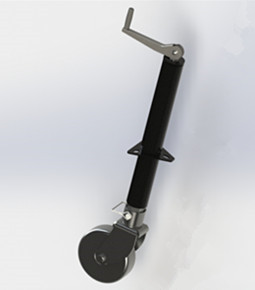
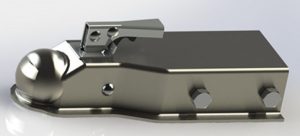
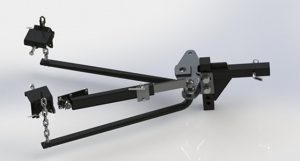
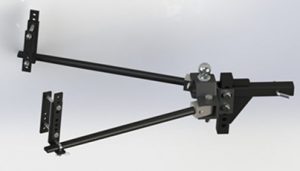
Daily design works-2 Weight Distribution & Sway Control System

Daily Design Works – Weight Distribution & Sway Control System
Tell us your vehicle model, SMI (Sino Machine Industry) will offer you whole Weight Distribution & Sway Control System.

Let us know your requirements, customized parts are available.
SMI (Sino Machine Industry) serving the industrial markets of the world.

Filed Under: Design, Research & Development, Weight Distribution & Sway Control System

  • « Go to Previous Page
  • Page 1
  • Interim pages omitted …
  • Page 12
  • Page 13
  • Page 14
  • Page 15
  • Page 16
  • Interim pages omitted …
  • Page 25
  • Go to Next Page »

Primary Sidebar

  • Home
  • About Us
  • Industries Served
    • SMI Products Overview
      • SMI Special Steel Products 01
      • SMI Special Steel Products 02
      • SMI Metal Recycling
      • NDT (Non Destructive Testing) service
  • Capabilities
    • Aluminum Industry
      • Aluminum Dross Press
      • Aluminum Dross Cooling Pan
      • Alloy Steel Sow Mold
      • Aluminum Dross Skim Blades and Skim Tools
      • Aluminum Furnace Skimming Tool or Skim blades used for Stirring and Mixing
      • Dross Press & Dross Processing
      • Application of Intelligent Ladle Slag Scraper (Skimming Tools) in steel mills and aluminum mills
      • Transmission Parts
      • The correct combination of the press head and the dross pan
      • 7-9kgs Small Standard Ingot Molds | Moldes de lingotes estándar pequeños de 7-9kgs
      • Comparison between Sow Molds and Ingot Molds
      • Aluminum Dross Transport Equipment
      • Aluminum Dross Recycling Systems
      • Aluminum, Magnesium, Brass, Bronze, Lead, Zinc Ingot Molds
      • Anode steel claw (Electrolytic claw) | Garra de acero del ánodo (garra electrolítica)
      • Anode Steel Yoke
  • eNews
  • Contact Us

Footer

Customized Products & Services

Professional Aluminum & Magnesium plant equipment supplier from China.
Up to 4,000 metric tons of mechanical products annually.
More than 30 years’ manufacturing and export experience.
Serving Global Aluminum & Magnesium smelters and metal recycling industry since 1996.

Recent Products & Services

  • High-Performance Aluminum Ingot Molds: The Complete Selection Guide
  • Casting vs Forging vs Machining: Choosing by Wear Mechanism
  • Ingot Mold Failure Modes: Causes, Prevention & Lifespan Tips
  • Global OEM Supply Chain: Heavy-Duty Crusher Wear Parts Manufacturing
  • Dross Pan Cover: Oxygen Barrier, Not Insulation

Found favorite parts & services

Sino Machine Industries — Heavy Industry Supplier with 30 Years of Manufacturing Expertise in Aluminium, Crushing & Transmission Parts. Serving primary smelters, recycling plants and OEM clients across 30+ countries. Get a free quote: [Inquiry@sinomachine.org]
  • Home
  • Privacy Policy
  • Terms of Use
  • Download Center
  • Site Map
  • Contact Us

Copyright © 2026 Sino Machine Industries (SMI) Serving Global Machinery Markets Since 1996