• Skip to main content
  • Skip to primary sidebar
  • Skip to footer

Sino Machine Industries

  • Home
  • About Us
  • Industries Served
    • SMI Products Overview
      • SMI Special Steel Products 01
      • SMI Special Steel Products 02
      • SMI Metal Recycling
      • NDT (Non Destructive Testing) service
  • Capabilities
    • Aluminum Industry
      • Aluminum Dross Press
      • Aluminum Dross Cooling Pan
      • Alloy Steel Sow Mold
      • Aluminum Dross Skim Blades and Skim Tools
      • Aluminum Furnace Skimming Tool or Skim blades used for Stirring and Mixing
      • Dross Press & Dross Processing
      • Application of Intelligent Ladle Slag Scraper (Skimming Tools) in steel mills and aluminum mills
      • Transmission Parts
      • The correct combination of the press head and the dross pan
      • 7-9kgs Small Standard Ingot Molds | Moldes de lingotes estándar pequeños de 7-9kgs
      • Comparison between Sow Molds and Ingot Molds
      • Aluminum Dross Transport Equipment
      • Aluminum Dross Recycling Systems
      • Aluminum, Magnesium, Brass, Bronze, Lead, Zinc Ingot Molds
      • Anode steel claw (Electrolytic claw) | Garra de acero del ánodo (garra electrolítica)
      • Anode Steel Yoke
  • eNews
  • Contact Us

Industries We Serve

January 23, 2023 By Sen Liang Leave a Comment

Dross Press Cooling Head

Dross Press Cooling Head — Aluminum Dross Press Component Supply

The dross press cooling head is the component that determines how much aluminum you actually recover from hot dross. Aluminum dross oxidises continuously after leaving the furnace — the cooling head must contact the dross quickly, seal tightly against the pan walls, and extract heat fast enough to arrest that oxidation before free metal is lost irreversibly.

SMI manufactures dross press cooling heads as a standalone supply item and as part of complete aluminum dross press systems. As an aluminum recycling systems integrator with in-house material development, casting manufacture and on-site installation capability, SMI supplies cooling heads not simply as cast components to a drawing — but as engineered parts of a complete dross management solution. Cooled and uncooled variants are available across all geometries and sizes, matched to any dross pan or press frame currently in service.


Cooled and Uncooled Configurations

SMI dross press cooling heads are available in cooled and uncooled configurations. The appropriate variant is determined by the specific operational requirements of each installation — furnace type, dross generation rate, existing cooling infrastructure, press cycle objectives and overall system design. Cooled heads incorporate an integrated forced-cooling circuit and are the standard recommendation where maximising metal recovery and minimising oxidation time are the primary objectives. Uncooled heads are available for installations where the process configuration, existing infrastructure or operational parameters make active cooling in the head unnecessary. Both configurations are manufactured from the same SMI ATM series castable and are available across the full range of geometries. SMI application engineers will confirm the most suitable configuration based on a review of process parameters at the enquiry stage.


How the Cooling Head Determines Your Recovery Rate

The dross press works on a single principle: compress and cool hot dross as quickly as possible after skimming, before oxidation converts free metal into oxide. The cooling head is where that principle either succeeds or fails. Four variables determine performance in practice:

  • Seal geometry — the head profile must match the dross pan walls precisely. A poor fit allows dross to escape under pressure, breaks the thermal seal, and extends cooling time. Recovery loss from a worn or mismatched head is continuous and largely invisible until a direct measurement is taken.
  • Active heat extraction — forced cooling through an integrated circuit in the head body produces the cooling rates needed to arrest oxidation effectively. Passive ambient cooling is not sufficient for high-throughput operations.
  • Thermal shock resistance — the head enters dross at 700°C+ and is then cooled, dozens of times per shift. Material that cracks, spalls or deforms under this cycling degrades both seal geometry and cooling performance simultaneously — progressively and invisibly until failure.
  • Dimensional stability over service life — wear and thermal deformation on the mating face progressively degrade the head-to-pan seal. Material choice and casting geometry determine how long a head remains dimensionally effective before replacement is required.

SMI cooling heads are engineered around all four of these failure modes. The design objective is consistent, measurable performance across the full service life of the head — not only at initial installation.


Design and Manufacturing

Proprietary Anti-Thermal-Shock Castable — SMI ATM Series

The cooling head material is the central engineering decision and the point where most generic or cost-reduced heads fail prematurely. A dross press cooling head requires three material properties simultaneously: high thermal conductivity in the cooling zone to extract heat efficiently; low thermal expansion to resist cracking under repeated thermal shock; and abrasion resistance against the hard aluminum oxide particles present in all dross types. Standard refractory grades are optimised for one or two of these properties — not all three together.

SMI’s ATM series material is developed and produced in-house. The formulation is proprietary. Independent third-party test data and material samples are available to qualified buyers on request. This is the same material specification used across SMI’s full range of casthouse consumables — a production-grade specification with a 30-year operational record in aluminum casthouses across multiple continents.

Cast-In Cooling Circuit

The internal cooling channels in an SMI cooled head are formed during the casting process as part of the original geometry — not machined in afterward. Machined-in channels create walls of non-uniform thickness at the cooling zone, producing stress concentration points that initiate cracking under thermal cycling. Cast-in channels maintain consistent section thickness throughout the head body, producing more uniform heat extraction and longer dimensional stability under service conditions. The cooling circuit interfaces with the press cooling skid via standardised quick-connect fittings, allowing head replacement without draining the cooling loop.

Pan-Matched Geometry

SMI supplies cooling heads in circular, rectangular and custom cross-sections. Where a customer has an existing pan set, SMI manufactures replacement heads to match the pan geometry exactly. Where a complete new pan-and-head set is required, the two are designed together to optimise the seal profile and heat transfer path as a matched system. Dimensional tolerances on mating surfaces are held to ±1 mm. The pan-and-head combination is the single configuration decision with the largest impact on achievable in-house recovery rate — SMI designs and supplies both as a matched set for this reason.

Adaptation to Third-Party Press Installations

SMI cooling heads can be adapted to work with third-party and competitor press installations. This is a relevant supply option for operations with serviceable press frames where heads have worn, cracked or degraded, and full system replacement is not the preferred route.

A dimensional match on the head body and mating face is the starting point, not the complete solution. Hydraulic output, control system parameters, cycle timing and commissioning requirements vary significantly between press manufacturers and models — these are not visible in the physical dimensions of the head alone. SMI conducts a technical review of the existing press system specifications before confirming the adaptation scope and supply terms. This engineering review is SMI’s standard process for delivering a qualified, system-compatible solution.

The full delivery scope for third-party adaptations — engineering review, component manufacture, on-site installation and commissioning — is available as a single-source engagement. Buyers are requested to provide press equipment specifications, hydraulic system data and available press documentation at the enquiry stage.


Dross Type Coverage

Dross composition and behaviour under compression varies significantly by furnace type, alloy, flux practice and holding time. SMI cooling heads are specified and validated for the full range of industrially relevant dross and slag types:

  • Dry dross — primary smelter, low oxide content, high free metal fraction
  • Wet dross — holding furnace, alloying additions, variable metal content
  • Black dross — salt-flux secondary smelting, elevated chloride content
  • White dross — secondary smelter pre-treated, lower free metal content
  • Salt slag — rotary furnace with salt flux, requires specific head geometry and cooling duty
  • Rotary furnace slag — high temperature, lower aluminum content, variable composition

For dross with unusual characteristics — very high free metal, atypical particle size distribution, elevated impurity content — SMI application engineers review the process parameters and recommend the correct head geometry, cooling configuration and material grade before order placement.


Operational Benefits

Measurable Improvement in In-House Metal Recovery

Faster cooling means less oxidation between pressing cycles. Tighter compaction means fewer voids where trapped metal remains inaccessible. In-house recovery with a correctly configured pan-and-head system typically reaches 45–70%, substantially above unpressed or air-cooled dross handling. One practical constraint: if a dross pan sits for more than 15 minutes with hot dross before reaching the press, thermiting has already progressed significantly. Adequate press capacity relative to dross generation rate is a prerequisite — the cooling head design cannot compensate for insufficient press throughput.

Automated Cycle — Reduced Operator Exposure

The dross press cycle is fully programmable and automated: the head descends, holds at set pressure, cooling is confirmed, and the head retracts. No manual intervention is required during pressing. This removes operator exposure to radiant heat and fume, eliminates skill variability in dross handling, and reduces the specialist knowledge required for day-to-day operation and maintenance.

Schedulable Consumable Cost

Replacement heads are a known, foreseeable consumable cost — not an unplanned capital event. SMI ATM series material and robust casting process support extended and predictable service life under sustained thermal cycling. Replacement heads for common press formats are held in stock; non-standard and legacy press frame heads are manufactured on short lead times. Quality documentation — dimensional inspection reports, material certification, hardness test data — is supplied as standard with every order.


Specifications at a Glance

Parameter Details
Material SMI ATM series — proprietary anti-thermal-shock castable, 30+ year production record
Configurations Cooled (integrated forced-cooling circuit) and uncooled — both available in all geometries, confirmed by application review
Cooling system (cooled variant) Cast-in internal circuit; forced cooling; quick-connect interface to press cooling skid
Available geometries Circular, rectangular, custom cross-section — new design or matched to existing pan
Press frame compatibility SMI press systems; third-party and competitor frames subject to engineering review and system specification confirmation
Dross types covered Dry, wet, black, white, salt slag, rotary furnace slag
Mating face tolerance ±1 mm on pan-matched sealing surfaces
Typical in-house recovery 45–70% with matched pan-and-head set, correctly configured
Quality documentation Dimensional inspection, material certification, hardness test data — standard with every order
Delivery scope Component supply only; matched pan-and-head set; or complete system including engineering review, installation and commissioning

Global Casthouse Supply — Who Uses SMI

SMI has been supplying aluminum recycling systems and casthouse consumables since 1996, with over 30 years of manufacturing and export experience across legal entities in mainland China, Hong Kong, Southeast Asia, Europe and the United States.

SMI casthouse consumables — including dross press cooling heads, dross pans, sow molds, drain sow molds and ingot molds — are in active service at primary aluminum smelters across the Middle East, Europe, India, North America and Asia-Pacific, including multiple operations within the world’s highest-output primary aluminum production groups. Global adoption of SMI dross pans, sow molds and ingot molds continues to accelerate as smelters and recycling operations standardise on SMI as their casthouse consumable supplier of choice.

All supply relationships are subject to confidentiality agreements. Reference accounts are available to qualified buyers under appropriate confidentiality terms.


Application Sectors

  • Primary aluminum smelters
  • Secondary aluminum smelters and refineries
  • Aluminum rod, billet and bar plants
  • Metal recycling and non-ferrous scrap processing plants
  • Aluminum die casting and foundry operations
  • Magnesium and other non-ferrous metal recovery operations

Related Products — Complete Dross Management from SMI

  • Aluminum Dross Press — complete press systems for primary and secondary aluminum operations
  • Dross Press Equipment Overview — system configurations, capacity planning and upgrade options
  • Dross Skim Pans and Sow Molds — pan-and-head matched sets for maximum in-house recovery
  • Aluminum Dross Cooling Pan — rapid salt cake cooling post-press
  • Dross Skim Blades and Casthouse Skimming Tools
  • Aluminum Dross Recycling Systems — full downstream processing: stirrer, cooler, crusher, screening and dust collection
  • Alloy Steel Sow Molds
  • Alloy Steel Ingot Molds, Sow Molds and Dross Pans for Aluminum Scrap Recycling

Request a Quotation or Technical Consultation

To specify the correct cooling head configuration for your operation, please provide the following when contacting SMI:

  • Press frame make, model and existing head dimensions (drawing, dimensional sketch or physical sample)
  • Dross pan design — drawing reference or internal dimensions
  • Dross type and approximate monthly dross volume (tonnes per month)
  • Operation type: primary smelter / secondary smelter / recycling plant
  • For third-party press installations: hydraulic system specifications and available press documentation

SMI will respond with a written technical recommendation and commercial proposal. Contact SMI — Dross Press Cooling Head Enquiry →
Filed Under: Dross Management Tagged With: aluminium dross, cooling head, Dross Press, dross press parts, press head replacement

January 20, 2023 By Sen Liang Leave a Comment

7-9kgs Small Standard Ingot Molds | Moldes de lingotes estándar pequeños de 7-9kgs

Small Standard Ingot Molds — 7 to 9kg Aluminium Ingot Casting

SMI manufactures small standard ingot molds for casting 7 to 9kg aluminium ingots — supplied to primary smelters, secondary remelters, aluminium rod plants and metal processing facilities requiring compact, high-cycle ingot casting tooling. All molds are produced to customer drawing or specification, with surface treatment options available to suit different operating environments and handling requirements.

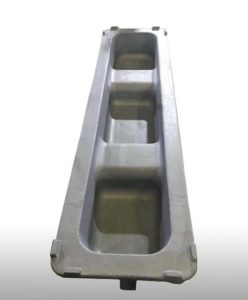
SMI small standard ingot mold three cavity long form natural steel finish — 7 to 9kg aluminium ingot casting to customer specification
Small standard ingot mold three cavity — natural steel finish, manufactured to customer ingot weight and dimension specificationpequeños de 7-9kgs)
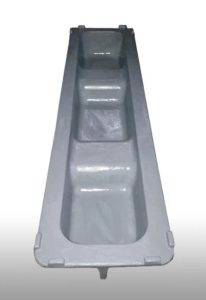
SMI small standard ingot mold three cavity long form with protective coating finish — 7 to 9kg aluminium ingot casting to customer specification
Small standard ingot mold three cavity — protective coating finish, same casting geometry available with or without surface treatment to customer requirementCoatingpequeños de 7-9kgs)

Product Description

The SMI small standard ingot mold is a three cavity long-form casting tool — designed for efficient, repeatable casting of small aluminium ingots in batch production environments. The three cavity configuration allows three ingots to be cast per pour, increasing throughput and reducing cycle time compared with single cavity alternatives. Cavity geometry is optimised for consistent ingot weight, clean release and stable stacking after casting.

Two surface finish options are available as shown in the gallery above — natural steel finish for standard service conditions, and protective coating finish for environments requiring enhanced corrosion resistance or specific handling requirements. Both configurations are produced from the same casting geometry to customer weight and dimension specification.


Key Features

  • Three cavity configuration — three ingots cast per pour, increasing production throughput and reducing cycle time
  • Consistent ingot weight — cavity geometry engineered for repeatable 7 to 9kg ingot output per cavity
  • High thermal resistance — material selection and wall geometry optimised for resistance to repeated thermal cycling in continuous casting service
  • Surface finish options — natural steel finish or protective coating to customer requirement
  • Custom dimensions — cavity dimensions, overall mold length and weight range available to customer specification
  • Clean release geometry — draft angles and internal cavity profile designed for consistent ingot release without sticking or deformation

Materials and Application

SMI small standard ingot molds are produced in material grades selected to the metal being cast and the operating temperature of the customer’s casting process:

  • Aluminium ingot casting — standard material grade optimised for aluminium service temperatures and thermal cycling conditions
  • Copper and copper alloy ingot casting — higher temperature material grades available for the elevated service temperatures of copper casting operations
  • Tin and lead ingot casting — material selection to the lower temperature requirements of tin and lead casting applications

SMI also manufactures ingot molds for other non-ferrous metal casting applications — contact SMI to discuss material selection and mold geometry for your specific casting requirements.


Specifications

Parameter Standard Custom
Ingot weight per cavity 7–9 kg Other weights available
Cavity configuration Three cavity long form Alternative configurations available
Surface finish Natural steel or protective coating To customer requirement
Material To casting metal and temperature specification Customer-specified grade available
Lead time Approximately 4–6 weeks from order confirmation Subject to order volume
Minimum order Contact SMI —
Shipping Ocean freight 1×20GP DDP available on request

Ordering Information

To select the appropriate small ingot mold configuration for your casting operation, the following information is required at enquiry stage:

  • Metal being cast — aluminium, copper, tin, lead or other
  • Required ingot weight per cavity — kg
  • Required ingot dimensions — length, width, height
  • Casting method — ladle pour, tilting furnace or other
  • Annual production volume — ingots per year
  • Surface finish preference — natural steel or protective coating
  • Any special handling or stacking requirements

بالعربية — قوالب السبائك الصغيرة القياسية لصب الألومنيوم

تقوم SMI بتصنيع قوالب السبائك الصغيرة القياسية لصب سبائك الألومنيوم من 7 إلى 9 كجم — تكوين ثلاث تجاويف، متوفرة بتشطيب فولاذي طبيعي أو طلاء واقي. متاحة أيضاً لصب سبائك النحاس والقصدير والرصاص. الأبعاد المخصصة وفق مواصفات العميل. وقت التسليم تقريباً 4–6 أسابيع. للاستفسار، تواصل مع فريق SMI →


En Español — Moldes de Lingotes Estándar Pequeños para Fundición de Aluminio

SMI fabrica moldes de lingotes estándar pequeños para la colada de lingotes de aluminio de 7 a 9 kg — configuración de tres cavidades en formato largo, disponibles con acabado de acero natural o recubrimiento protector. También disponibles para la colada de lingotes de cobre, estaño y plomo. Dimensiones personalizadas según especificación del cliente. Plazo de entrega aproximadamente 4–6 semanas. Para consultas, contacte al equipo de SMI →


Related Products — SMI Aluminium Casting Consumables

  • Alloy Steel Sow Mold — 8630 WCB 9 and SMI & HT proprietary material options
  • Dross Skim Pans and Sow Molds — full casthouse consumable range
  • Aluminum Dross Press — SMI40, SMI60, SMI80 dross press systems
  • Contact SMI — Ingot Mold Enquiry →

Request a Quotation

SMI will respond with a written technical assessment and commercial proposal within two working days of receiving your enquiry. Contact SMI — Small Ingot Mold Enquiry →

Filed Under: Casting Consumables Tagged With: 7kg ingot mold, 9kg ingot mold, aluminium ingot, small ingot mold, standard ingot mold

January 7, 2023 By Coffy Leave a Comment

Slewing Bearings

Slewing Bearings
Slewing Bearings

Slewing support bearings consist of an inner ring and an outer ring, one of which usually contains a gear. Together with the connecting holes in the two rings, they enable optimized power transmission and quick and easy connections between adjacent machine components. The raceways of the bearings work together with the rolling parts (as well as the cage or spacer) to withstand one-way loads or combined loads in any direction.

SMI manufactures a wide range of standard and custom support slewing bearings with an outer diameter of 0.1 – 16 m to meet the specific application needs of our customers.

Slewing Bearings -2
Slewing Bearings -2

SMI products are widely used in: precision machine tools, machining centers, industrial robots, harmonic reducers, precision spindles and turntables, CNC welding machines, automobiles and automobile production lines, electronic and electrical equipment lines, building materials machinery, high-voltage switches, high-wire rolling mills, textile machinery, oil and gas industry, ports, mining lifting wire rope industry; automobile tire radial braiding machine; wire rope braiding machine; silicon wafer cutting machine; Industrial (automotive and household appliances) coating lines and other fields.

Filed Under: Design, Research & Development, Gear & Gearboxes, Machined Parts & Custom Castings, Other mechanical parts and accessories, Projects, Transmission Parts

December 26, 2022 By Sen Liang Leave a Comment

Trailer Winch – Durable Hand Crank – Hand Winch with Cable or Wire-rope

Hand Crank Trailer Winch — Standard and Custom Configurations with Cable or Wire Rope

Hand crank trailer winch with steel wire rope and hook — carbon steel zinc-plated construction, 1200–3500 lb capacity range
Hand crank winch — heavy-duty carbon steel body with zinc-plated finish, steel wire rope and load hook
Compact hand winch with two-way ratchet mechanism and wire rope — custom load rating and cable configuration available
Compact hand winch configuration — two-way ratchet, wire rope and hook, suitable for trailer and marine applications
Hand winch webbing strap with hook — standard accessory for trailer winch applications, custom strap length and width available
Webbing strap with hook — standard accessory option for hand crank trailer winch, custom length and width available

SMI supplies hand crank trailer winches in standard configurations and fully customised specifications — manufactured from heavy-duty carbon steel with zinc-plated finish for corrosion resistance and long service life. Standard capacity range covers 1,200 lb to 3,500 lb, with custom load ratings, drum dimensions, cable length and material configurations available to meet specific application requirements.

Winch supply is one part of SMI’s broader capability in mechanical components and OEM manufacturing — a capability with established market presence in the United States and Japan. Custom configurations are available for OEM customers requiring specific dimensions, load ratings, surface treatments or cable/strap specifications.


Standard Features

Construction

Heavy-duty carbon steel body with zinc-plated finish — resistant to corrosion and suitable for outdoor and marine-adjacent environments. Solid construction designed for repeated load cycles in trailer, marine and industrial handling applications.

Capacity Range

Standard range: 1,200 lb to 3,500 lb cranking capacity. Custom load ratings outside this range are available — please specify required working load and safety factor at enquiry stage.

Two-Way Ratchet Mechanism

Fitted with a sturdy safety pawl allowing forward and reverse ratcheting. The ratchet mechanism prevents load slip during cranking and holds the load securely when the handle is released.

Cable or Wire Rope Options

Available with steel wire rope or webbing strap configurations depending on application. Cable length and diameter are customisable. Hook and attachment hardware included as standard.

Handle

Extended anti-slip handle for secure grip and comfortable operation under load. Handle length customisable for OEM applications.

Hand winch with cable drum and hook — engineering drawing showing key dimensions, custom configurations available
Hand winch with cable drum — product and dimensional drawing, standard and custom configurations available
Upright handle hand winch with ratchet wheel — engineering drawing showing dimensional specifications
Upright handle hand winch configuration — engineering drawing showing key dimensions, OEM and custom specifications available
Heavy-duty winch mounting base plate with bolt pattern — engineering drawing for custom trailer and equipment frame mounting
Heavy-duty winch mounting base plate — standard bolt pattern configuration, custom mounting available to customer specification

Custom and OEM Supply

SMI’s manufacturing capability in this product category extends well beyond standard catalogue configurations. Custom options available include:

  • Drum dimensions — diameter and width to suit specific cable capacity or installation envelope requirements
  • Load rating — working load and gear ratio specified to application requirement
  • Cable or strap — wire rope diameter and length, webbing strap width and length, hook type and rating
  • Mounting configuration — standard bolt-pattern base plate or custom mounting to suit specific trailer or equipment frame
  • Surface treatment — zinc plating, powder coating or other finishes to customer specification
  • Material — standard carbon steel or alternative material grades to customer specification
  • Branding — OEM branding and packaging available

OEM supply relationships in the United States and Japan markets are an established part of SMI’s mechanical components business. Enquiries from OEM customers are welcome at any volume level.

Hand winch gear wheel and ratchet pawl detail — two-way ratchet mechanism for secure load holding
Gear and ratchet detail — two-way ratchet pawl mechanism prevents load slip during cranking and holds load when handle is released
Hand winch safety pawl engagement detail — ratchet mechanism for forward and reverse operation
Safety pawl engagement detail — robust ratchet mechanism allows forward and reverse cranking with secure load retention
Hand winch complete set — winch body, webbing strap, wire rope drum, mounting base plate and crank handle
Complete hand winch accessory configuration — winch body, strap, wire rope, base plate and handle, custom configurations and OEM packaging available
Hand winch extended anti-slip crank handle — comfortable grip for manual operation under load
Extended anti-slip crank handle — custom handle length available for OEM applications

Typical Specifications

Parameter Standard Range Custom
Capacity 1,200 lb – 3,500 lb Available on request
Body material Heavy-duty carbon steel Alternative grades available
Surface finish Zinc-plated Powder coat and other finishes available
Cable type Steel wire rope or webbing strap Diameter, length and hook type customisable
Ratchet mechanism Two-way — forward and reverse —
Mounting Standard bolt-pattern base plate Custom mounting configuration available
OEM branding Available Packaging and labelling to customer spec

Applications

  • Trailer loading and securing — boat trailers, equipment trailers, flatbed trailers
  • Marine and dock applications — boat launching, mooring assist
  • Construction and industrial sites — equipment positioning, load handling
  • Vehicle recovery — pickup trucks, ATVs, utility vehicles
  • General industrial handling — wherever a compact, manually operated pulling or lifting device is required

Image Gallery — Component Detail

The gallery images above show standard product configurations, engineering dimensional drawings and component detail — gear mechanism, pawl assembly, mounting base plate, cable drum, wire rope and strap accessories. Custom configurations may differ from images shown.


Request a Quotation

To enquire about standard or custom hand winch supply, please provide the following:

  • Required capacity — working load in lb or kg
  • Cable or strap preference — wire rope or webbing, with length and diameter if known
  • Mounting requirements — standard base plate or custom configuration
  • Surface finish preference
  • Annual volume — units per year
  • OEM requirements — branding, packaging, labelling

SMI will respond with a written technical recommendation and commercial proposal. Contact SMI — Hand Winch Enquiry →

Filed Under: Truck & Trailer Parts Tagged With: hand winch, towing equipment, trailer winch, Truck & trailer parts, wire rope winch

April 10, 2022 By Sen Liang Leave a Comment

Aluminium Dross Recycling Machine

Aluminium Dross Recycling Machine — Dross Press Systems for Aluminium Casthouses

An aluminium dross recycling machine is the operational term used across many aluminium casthouses for what engineers specify as an aluminium dross press — a hydraulic compression system that recovers free metal from hot aluminium dross at the point of generation, before oxidation converts recoverable aluminium into oxide waste.

SMI has been manufacturing and supplying aluminium dross recycling machines to primary smelters, secondary smelters and metal recycling operations worldwide for over 30 years. Equipment is supplied under the SMI brand, under OEM arrangements, or under the customer’s preferred brand identity — configuration, capacity and branding are all subject to customer specification. The image below shows one such installation, supplied to customer specification.

SMI Aluminium Dross Recycling Machine
Aluminium Dross Recycling Machine — hydraulic dross press with integrated cooling system, supplied to customer specification.

What the Machine Does — The Operational Reality

Hot aluminium dross skimmed from the furnace is not waste. It contains significant free metal — the exact proportion depends on furnace type, alloy, operating practice and how quickly the dross reaches the press after skimming. Every minute of delay between skimming and pressing allows continued oxidation, converting recoverable aluminium into aluminium oxide at a rate that represents a direct production loss on every cast.

The dross recycling machine addresses this at the source. The automated press cycle — hydraulic head descent, compression at controlled pressure, forced cooling through the integrated cooling circuit, head retraction — processes a full pan of hot dross in a single cycle. No manual intervention is required during pressing. The output is a dense aluminium block with significantly reduced oxide content, ready for return to the furnace or casting line.

In-house metal recovery with a correctly configured dross press system is typically 20–35%, depending on operational conditions. The variables that most affect recovery rate in practice are the time elapsed between skimming and pressing, the condition of the press head and dross pan as a matched set, and the dross generation characteristics of the specific furnace operation.


How SMI Supplies Dross Recycling Machines

Standard SMI-Branded Systems

SMI supplies aluminium dross press systems under the SMI brand in three standard capacity configurations — SMI40, SMI60 and SMI80 — processing 250–700 kg of dross per pressing cycle. Full technical specifications, hydraulic component details and delivery terms are covered on the Aluminum Dross Press product page.

OEM Supply

SMI manufactures dross press systems for supply under OEM arrangements — where the equipment is integrated into a customer’s own product line, system package or project supply. OEM customers receive the same manufacturing quality and engineering support as direct SMI-branded supply, with configuration, capacity, labelling and documentation adapted to the OEM customer’s requirements. NDA-based supply is standard practice for OEM engagements.

Custom-Branded and Customer-Specified Equipment

Where a customer operates under their own equipment brand, or has specific requirements for branding, colour, control system interface or documentation language, SMI accommodates these requirements as part of the supply specification. Custom-branded dross press systems have been supplied to aluminium operations across multiple regions — the equipment in service carries the customer’s identity; the engineering and manufacturing capability behind it is SMI’s.

Configured to Your Operation

No two casthouse installations are identical. SMI dross recycling machine configurations take into account the full operational context of each installation — furnace type and capacity, dross generation rate, material handling constraints, available utilities and the dross characteristics specific to each operation. The press head and dross pan combination is specified as a matched set for each installation, as this pairing has the largest single impact on achievable recovery rate.


Dross Press as Part of a Complete Recovery Line

The dross press is the first and most critical stage in aluminium dross recovery — but it is not the only stage. Pressed dross still contains residual metal in the form of fine aluminium particles within the oxide matrix. A complete recovery line processes this residual material through controlled cooling, ball mill crushing and multi-stage vibrating screen separation, producing three separated fractions: metal-rich particles returned to the furnace, intermediate material recycled through the press, and fine aluminium oxide powder for industrial resale.

SMI supplies the complete downstream processing line as well as the dross press stage. For operations building out their dross recovery capability in stages, individual equipment items — cooling unit, ball mill, screening system — can be added progressively. Details of the downstream processing equipment are covered on the Aluminum Dross Recycling Systems page.


Upgrade and Replacement Supply

For operations with existing dross press installations — whether SMI-supplied or from other manufacturers — SMI provides replacement and upgrade supply across the consumable and component range. The press head (cooling head) and dross pan set are the components that most directly determine ongoing recovery performance and are the most common upgrade focus in existing installations.

Where the press frame is serviceable but recovery performance has declined, targeted component replacement typically delivers a measurable improvement without the capital requirement of full system replacement. Third-party press frame adaptations are subject to engineering review before supply confirmation — hydraulic output, control parameters and commissioning requirements vary between press manufacturers and must be confirmed before a compatible replacement head can be specified.


Application Sectors

  • Primary aluminium smelters
  • Secondary aluminium smelters and refineries
  • Aluminium rod, billet and bar plants
  • Metal recycling and non-ferrous scrap processing plants
  • Aluminium die casting and foundry operations
  • OEM equipment integrators and aluminium plant system suppliers

Global Supply and Service

SMI has been supplying aluminium dross recycling machines and casthouse consumables since 1996, with over 30 years of manufacturing and export experience across legal entities in mainland China, Hong Kong, Southeast Asia, Europe and the United States. SMI dross press equipment is in active service at primary and secondary aluminium smelters across the Middle East, Europe, India, North America and Asia-Pacific, including multiple operations within the world’s highest-output primary aluminium production groups.

Equipment is supplied as complete systems with on-site installation and commissioning support. Replacement consumables — press heads, dross pan sets — are held in stock for common configurations and dispatched on short lead times. All supply relationships are subject to confidentiality agreements. Reference accounts are available to qualified buyers under appropriate confidentiality terms.


Related Products — Complete Dross Management from SMI

  • Aluminum Dross Press — SMI40, SMI60, SMI80 specifications and delivery details
  • Dross Press Cooling Head — cooled and uncooled variants, all geometries
  • Dross Press Equipment Overview — system configurations and upgrade options
  • Dross Skim Pans and Sow Moulds — matched pan-and-head sets
  • Aluminum Dross Cooling Pan — post-press salt cake and dross cooling unit
  • DCU Dross Compression Unit — dross press in operation, video
  • Aluminum Dross Recycling Systems — complete downstream processing line
  • Alloy Steel Sow Moulds

Request a Quotation or Technical Consultation

To discuss dross recycling machine requirements — standard SMI-branded systems, OEM supply, or custom-configured equipment — please contact SMI with the following information:

  • Operation type: primary smelter / secondary smelter / recycling plant / OEM integrator
  • Furnace type and approximate dross generation rate per shift
  • Dross type: dry / wet / black / white / salt / rotary furnace
  • Supply requirement: complete system / replacement components / OEM arrangement
  • Branding and documentation requirements if applicable

SMI will respond with a written technical recommendation and commercial proposal. Contact SMI — Aluminium Dross Recycling Machine Enquiry →

Filed Under: Dross Management Tagged With: aluminium dross, aluminium recycling, dross processing equipment, dross recycling, metal recovery

April 5, 2022 By Coffy Leave a Comment

Key Features of our designed skim pans, slag bins and sow moulds

SMI Casthouse Consumable Design Features — Skim Pans, Slag Bins and Sow Moulds for Aluminium Operations

The casthouse consumables used in aluminium dross management — skim pans, slag bins and sow moulds — are not interchangeable commodity items. Their design directly determines how much aluminium is recovered from each skimming cycle, how long the equipment lasts in continuous casthouse service, and how efficiently the pressed material can be handled downstream. SMI’s casthouse consumable designs are developed specifically for aluminium dross press applications, with each design feature serving a defined function in the recovery and handling process.

The material used across SMI’s skim pans, slag bins and sow moulds has been specifically developed to withstand the severe casthouse environment — engineered for both mechanical shock resistance and thermal shock resistance across repeated heating and cooling cycles.

Aluminium casthouse furnace interior during skimming operation — high-temperature environment for skim pan and slag bin service
Aluminium casthouse furnace environment — the extreme heat and mechanical demands of continuous skimming operations define the performance requirements for SMI skim pans and slag bins
Hot aluminium dross and salt slag in skim pan immediately after skimming — casthouse service conditions for SMI casthouse consumables
Freshly skimmed hot dross in casthouse service — thermal shock resistance and structural integrity under repeated high-temperature cycling are the primary design requirements for SMI skim pans and slag bins
Recovered aluminium ingots after dross pressing cycle — end product of effective skim pan and dross press operation in aluminium casthouse
Recovered aluminium after pressing — the volume and quality of recovered metal is directly determined by skim pan design, drain hole configuration and press head geometry

Key Design Features

1. High Volume Drain Hole Open Area

The drain hole configuration in SMI skim pans is designed to maximise the total open area available for aluminium drainage during pressing. A higher drain hole open area allows recovered liquid aluminium to exit the pan more rapidly and completely during the press cycle, reducing the volume of metal retained in the pressed dross cake. The hole geometry and spacing are specified to prevent blockage under the viscosity conditions of hot aluminium dross, maintaining drainage performance over the full service life of the pan.

2. Small Compartment Chamber Design — Accelerated Cooling

SMI skim pans incorporate a small compartment chamber configuration rather than a single large open volume. Smaller chambers present a higher ratio of cast steel wall surface area to dross volume — the primary mechanism driving thermal extraction from the dross. This accelerates the cooling of the dross mass, reducing the time required before the pan can be moved to the press and shortening the overall cycle time per pan. Faster cooling also reduces the window during which thermitic oxidation of free aluminium can occur, directly preserving recoverable metal content.

3. Small Chambers for Full Level Pressing — Higher Press Recovery

The small chamber geometry enables what is referred to as full level pressing — the press head makes effective contact with the dross across the full area of each chamber rather than pressing into a partially filled or uneven dross surface. When the press head contacts dross at a consistent level across the chamber, compression force is applied uniformly, maximising the mechanical squeeze effect and the volume of liquid aluminium expelled through the drain holes. This results in a higher in-house aluminium recovery per pressing cycle compared to larger single-chamber pan configurations where the press head contact is less consistent.

4. Small Chambers for Optimum Downstream Processing

The pressed dross cake produced in each chamber is sized by the chamber geometry. Smaller chamber dimensions produce pressed skulls of a size compatible with standard downstream secondary mechanical processing equipment — ball mills, screening systems and remelting furnaces — without requiring additional size reduction before charging. This reduces handling steps and processing costs at the secondary recovery stage, improving the overall economics of the dross management operation.

5. Proprietary High-Temperature Alloy — Extended Service Life

SMI skim pans, slag bins and sow moulds are manufactured from a proprietary high-temperature alloy developed specifically for continuous casthouse service. The material is selected and formulated for long operating life under the combined mechanical and thermal demands of the casthouse environment — repeated thermal cycling, impact loading during skimming, and the corrosive conditions of aluminium dross contact. Extended service life directly reduces the cost per tonne of dross processed over the operating life of the equipment.

6. Chamber Dividers Below Pan Rim — Elimination of Pan Distortion

Pan failure in casthouse service frequently originates at the pan rim, where repeated mechanical impact during skimming and thermal expansion under heat load causes outward deformation of the pan walls — a condition commonly referred to in casthouse operations as “mushrooming” (progressive outward distortion of the pan wall geometry under combined thermal and mechanical stress). Once mushrooming begins, the pan-to-press-head seal is compromised, press recovery deteriorates, and the pan must be replaced.

SMI’s chamber divider geometry is positioned just below the top of the pan rather than flush with the rim. This configuration provides internal structural reinforcement at the point where wall distortion originates, resisting the outward deformation forces generated by skimming impact and thermal cycling. The result is a pan that maintains its dimensional geometry — and therefore its press-head seal effectiveness — over a longer service life than designs without this structural feature.


Design Feature Summary

Design Feature Primary Function Operational Benefit
High volume drain hole open area Maximum aluminium drainage during pressing Higher drained metal recovery, reduced retention in pressed cake
Small compartment chambers Accelerated thermal extraction from dross Faster cooling cycle, reduced oxidation window
Full level pressing geometry Uniform press head contact across chamber surface Higher press recovery per cycle
Chamber-sized pressed skulls Compatibility with downstream processing equipment Reduced handling steps, lower secondary processing cost
Proprietary high-temperature alloy Thermal and mechanical shock resistance Extended service life, lower cost per tonne processed
Sub-rim chamber dividers Structural reinforcement against wall distortion Maintained pan geometry, sustained press-head seal effectiveness

En Español

Las palas de escoria, contenedores de escoria y lingoteras de SMI están diseñadas con características específicas para maximizar la recuperación de aluminio en cada ciclo de prensado. El material utilizado ha sido desarrollado específicamente para resistir el severo entorno de las fundiciones de aluminio, soportando tanto el choque mecánico como el choque térmico en ciclos continuos de calentamiento y enfriamiento.

Las características clave de diseño incluyen: alta área de abertura de orificios de drenaje para máximo drenaje de aluminio; cámaras compartimentadas pequeñas para enfriamiento rápido; geometría de prensado a nivel completo para mayor recuperación por ciclo; divisores de cámara bajo el borde del recipiente para eliminar la distorsión de las paredes; y aleación propietaria de alta temperatura para una vida útil prolongada en servicio continuo de fundición.

Para consultas técnicas, contacte al equipo de SMI →


En Griego — Βασικά Χαρακτηριστικά Σχεδιασμού

Τα δοχεία σκωρίας, οι κάδοι σκωρίας και οι μήτρες χύτευσης SMI σχεδιάζονται με ειδικά χαρακτηριστικά για τη μεγιστοποίηση της ανάκτησης αλουμινίου σε κάθε κύκλο συμπίεσης. Το υλικό κατασκευής έχει αναπτυχθεί ειδικά για να αντέχει το σκληρό περιβάλλον των χυτηρίων αλουμινίου — αντιστέκεται τόσο σε μηχανικές όσο και σε θερμικές καταπονήσεις κατά τη διάρκεια συνεχών κύκλων θέρμανσης και ψύξης.

Τα βασικά χαρακτηριστικά σχεδιασμού περιλαμβάνουν: υψηλή συνολική επιφάνεια οπών αποστράγγισης, μικρές διαμερισματικές θαλάμους για ταχεία ψύξη, γεωμετρία πλήρους επιπέδου συμπίεσης, ενισχυτές κάτω από το χείλος του δοχείου για αποφυγή παραμόρφωσης, και ιδιόκτητο κράμα υψηλής θερμοκρασίας για μεγάλη διάρκεια ζωής. Για τεχνικές ερωτήσεις, επικοινωνήστε με την ομάδα SMI →


بالعربية — الميزات الرئيسية للتصميم

تتميز أحواض الخبث ومجمعات الخبث والقوالب من SMI بخصائص تصميم محددة لتحقيق أقصى قدر من استرداد الألومنيوم في كل دورة ضغط. تم تطوير المادة المستخدمة خصيصاً لتحمل البيئة القاسية لمصاهر الألومنيوم — مقاومة للصدمات الميكانيكية والحرارية على حد سواء خلال دورات التسخين والتبريد المتكررة.

تشمل الميزات الرئيسية للتصميم: مساحة فتحات تصريف عالية لتحقيق أقصى تصريف للألومنيوم؛ حجرات مقسمة صغيرة للتبريد السريع؛ هندسة الضغط على المستوى الكامل لتحقيق أعلى معدل استرداد لكل دورة؛ فواصل الحجرة أسفل حافة الحوض لمنع التشوه؛ وسبيكة خاصة عالية الحرارة لإطالة عمر الخدمة. للاستفسارات التقنية، تواصل مع فريق SMI →


Related Products — SMI Casthouse Consumables

  • Dross Skim Pans and Sow Molds — matched pan-and-head sets, proprietary alloy steel
  • Steel Casting Salt Slag Bins — purpose-built for secondary remelt rotary furnace operations
  • Alloy Steel Sow Mold — 8630 WCB 9 and SMI & HT anti-thermal shock material options
  • Dross Press Cooling Head — matched to SMI skim pan geometry, cooled and uncooled variants
  • Aluminum Dross Press — SMI40, SMI60, SMI80 complete dross press systems
  • Aluminum Dross Cooling Pan — post-press salt cake and dross cooling unit
  • Dross Processing in Aluminium Recycling Operations — operational guide, pan design and press configuration

Contact SMI

To discuss skim pan, slag bin or sow mould specification for your operation, or to review an existing casthouse consumable configuration, please contact SMI’s application engineering team. Contact SMI →

Filed Under: Casting Consumables Tagged With: Skim Pans, slag bins, Sow Molds

  • « Go to Previous Page
  • Page 1
  • Interim pages omitted …
  • Page 5
  • Page 6
  • Page 7
  • Page 8
  • Page 9
  • Interim pages omitted …
  • Page 25
  • Go to Next Page »

Primary Sidebar

  • Home
  • About Us
  • Industries Served
    • SMI Products Overview
      • SMI Special Steel Products 01
      • SMI Special Steel Products 02
      • SMI Metal Recycling
      • NDT (Non Destructive Testing) service
  • Capabilities
    • Aluminum Industry
      • Aluminum Dross Press
      • Aluminum Dross Cooling Pan
      • Alloy Steel Sow Mold
      • Aluminum Dross Skim Blades and Skim Tools
      • Aluminum Furnace Skimming Tool or Skim blades used for Stirring and Mixing
      • Dross Press & Dross Processing
      • Application of Intelligent Ladle Slag Scraper (Skimming Tools) in steel mills and aluminum mills
      • Transmission Parts
      • The correct combination of the press head and the dross pan
      • 7-9kgs Small Standard Ingot Molds | Moldes de lingotes estándar pequeños de 7-9kgs
      • Comparison between Sow Molds and Ingot Molds
      • Aluminum Dross Transport Equipment
      • Aluminum Dross Recycling Systems
      • Aluminum, Magnesium, Brass, Bronze, Lead, Zinc Ingot Molds
      • Anode steel claw (Electrolytic claw) | Garra de acero del ánodo (garra electrolítica)
      • Anode Steel Yoke
  • eNews
  • Contact Us

Footer

Customized Products & Services

Professional Aluminum & Magnesium plant equipment supplier from China.
Up to 4,000 metric tons of mechanical products annually.
More than 30 years’ manufacturing and export experience.
Serving Global Aluminum & Magnesium smelters and metal recycling industry since 1996.

Recent Products & Services

  • High-Performance Aluminum Ingot Molds: The Complete Selection Guide
  • Ingot Mold Failure Modes: Causes, Prevention & Lifespan Tips
  • Global OEM Supply Chain: Heavy-Duty Crusher Wear Parts Manufacturing
  • Low Temperature Threaded Check Valve VS Flanged Check Valve
  • Stainless Steel SS304 SS316 Investment Casting Wing Nut with Machining

Found favorite parts & services

Sino Machine Industries — Heavy Industry Supplier with 30 Years of Manufacturing Expertise in Aluminium, Crushing & Transmission Parts. Serving primary smelters, recycling plants and OEM clients across 30+ countries. Get a free quote: [Inquiry@sinomachine.org]
  • Home
  • Privacy Policy
  • Terms of Use
  • Download Center
  • Site Map
  • Contact Us

Copyright © 2026 Sino Machine Industries (SMI) Serving Global Machinery Markets Since 1996